Observations about the different shades of blue in our life
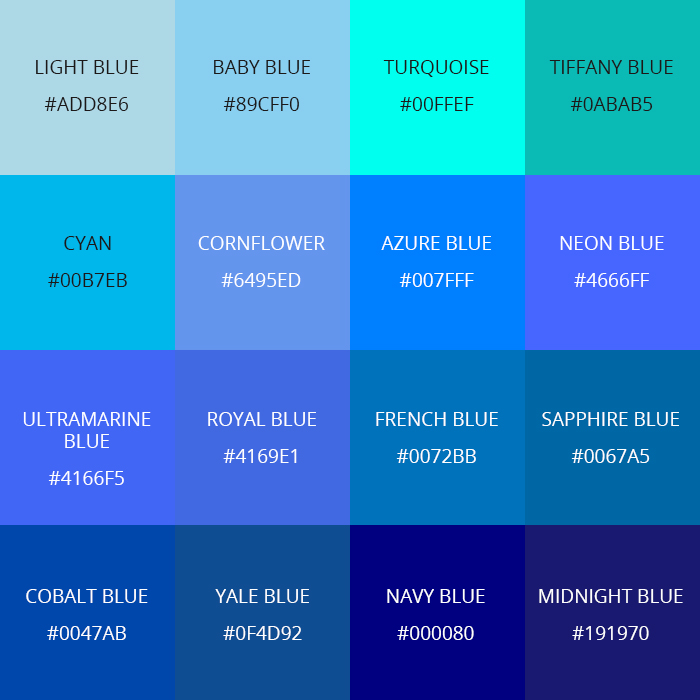
As a writer, one of the things I unintentionally do, and have done for quite some time, is to create analogies.
I came to Bodrum yesterday, a vacation district in the Aegean region of Turkey. I’m staying at my friend’s house, and this blog post was inspired by the vast number of ocean paintings in their house, which I recently learned her mom painted (this is not relevant to my blog post, but it seemed like a nice detail to include.)
So I guess life can be analogized to those paintings, or in a more simplified version, to the different shades of blue.
I believe that life is baby blue when we are first born. Not necessarily because it’s called “baby” blue, but perhaps because it is a shade of blue so pure and innocent that it was called “baby” blue, something purely associated with innocence and love and vulnerability, in the first place. Our life, up until we are about seven, is baby blue. Perhaps there are some darker blues at times, for example when our playdates are cut short, or when we twist our ankle while playing, or when we lose a toy we really love, worse yet, when we have to unwillingly gift it to our friend because they liked it so much and it’s the “right thing to do”. (I don’t know if this is a universal experience or simply a Middle-Eastern one, but whenever my friends came over, they would return with half of my toys. This is why, as a child, I always insisted that playdates be held at my friends’ houses, so that I could add to my collection of toys and dolls while not having to give any of it up. Once I grew up and got to about thirteen years old, I felt really guilty about doing this and donated most of my toys, except for the ones that had a special place, like the first toy my grandfather gifted me, to charity.)
After seven years old, we begin to develop a consciousness. “I” vs. “them” or “us” vs. “them” comes into play. We develop a sense of ownership, and our problems originate. After all, most problems in history have been caused because of ownership. Tribal wars, the wars we experience today, even mere conflicts between us and our friends, are caused by ownership. “That is my doll!” you argue with your sister. “Those are my mines and my gems and my money!” argue countries between one another. So your life goes from baby blue to perhaps light blue. Still light, but a less bright, less innocent tone of blue. Whereas baby blue was a calm and serene ocean on a sunny day, light blue is a calm ocean on a rainy day. There’s still peace in it, but less peaceful. We later get to realize that these times are indeed very peaceful, even more so than the previous stages of our life. Because on a sunny day where the sea is calm, everyone will be at the beach and you won’t get to enjoy your books or your alone time, but on a rainy day on the beach, you’ll see 2-3 people maximum, and those people, just like you, will be people looking for peace and quiet and will therefore not bother you. So perhaps this stage is better.
After this stage, we begin to realize the corruption in the world. Not completely, as our partially innocent brains don’t quite understand all the horror in the world. But this is when we first show signs of understanding how awful the world can be, and this is when we step into puberty. The sudden realization of how the world is not a peaceful and serene sea, but rather deadly and crashing waves that you could get lost in if you’re not careful, along with the incredibly rapidly changing hormones in our body, quickly changes the blues in our life. They turn into yale blue, because our life darkens and fades at the same time. Some people, unfortunately, never mature enough to quite get away from yale blue being their “default” setting. This can be because of external factors like where they live, the people they surround themselves with, their culture, and even their genetics. This is a bad stage in our life, where we feel as though the only people who can understand us are artists writing depressive songs, where we spend hours staring into the mirror and going to bed, defeated, not having found a single aspect of our body to be proud of, however stupid this may seem when we look back on it.
Fortunately, after this stage, the knowledge that the world is awful and terrible and horrible settles in. But with it, comes the knowledge that it can be equally, or even more so, beautiful and pleasing and interesting. Our world turns into french blue. It’s an ever-so-slight change, but it’s brighter, more optimistic. I believe I am still at this stage, but this is an observation blog, and I will write the rest based on what I have observed.
After this stage, life branches out. It completely changes for everyone. Whereas one person might find the “purpose”, the “answer to the question” (42, as per Douglas Adams’ fantastic novel “The Hitchhiker’s Guide to the Galaxy) sooner than one other, and their blue might change immediately after french blue, one person might spend years going back and forth between shades. Therefore, I can’t comment on this part of life. I can comment on what I call the “Gregor Samsa pre-bug” part of life (from “Metamorphosis, by Franz Kafka). Gregor Samsa is a businessman who one day turns into a huge bug and struggles to continue to live as his family, his boss and everyone familiar to him is extremely scared of him. This journey teaches both him and the reader a few important things and so on. The Gregor Samsa that exists before he turns into a bug is one that wakes up at 5 AM to get to the bus station, to get to the workplace and be there earlier than anyone, even his boss. He works and works and comes home late at night, sleeps, and repeats. This unfortunate cycle happens to some, or most, people under a capitalist economy. This part of our lives is not on the colors in the picture. It is an incredibly transparent, light blue that seems more like grey. Some people, the “lucky ones”, will be able to get themselves out of this cycle, or if they’re really lucky, will not experience it in the first place. They’ll find their “purpose”.
After we find our “purpose”, after we experience that moment of happiness, pure happiness, in which we perhaps go back to baby blue or light blue for a second, we realize that that is what we need to do. And therefore, we do that. We do what will make us happy. And this is when our life becomes a swirl of all the blue tones, a spectacular display of blue. We stop worrying about what tone our life is, because we realize that there is no tone that we can conform ourselves to at our current stage of life. All of these shades will be beautiful and special in their own way, something that we may not have recognized earlier. We become a mixture of cyan blue and sapphire blue, and navy blue and turquoise.
Then we get old. And we turn back into light blue, and eventually baby blue. We gain back the innocence we once had, as we become unable to pay attention to the changes that are always taking place in the world, and become aliens to the world which we once conquered and ruled.
There are also a few extremities. For example, discriminatory people. People who choose not to include certain people in certain things. In these cases, it is not the stage of life that has a blue tone, but rather the personality. It goes from being a temporary shade, to one that is embedded into the very essence of that person. And that shade is black. Black like the inside of the apple that the evil witch gave to Snow White. And unless that person truly changes the essence of their soul, they’ll stay black, even as an old person whose counterparts will experience a baby-blue-like bliss.
Don’t be that person. Stay blue. 🙂


Leave a Reply